
Lip filler injections are one of the most popular cosmetic treatments, but many patients wonder what to expect when it comes to swelling. The lip filler swelling stages usually peak within the first 2–3 days, then steadily improve over 1–2 weeks.
Many considering lip filler treatments are concerned about potential swelling and recovery. Mild-to-moderate swelling is actually a normal part of the healing process after lip injections. This temporary fullness signals the body’s natural inflammatory response as it works to heal microscopic wounds caused by the filler injection.
With proper aftercare, swelling is manageable and part of the normal healing process. Understanding the lip filler swelling timeline helps you feel confident and reassured as your lips settle into their natural, enhanced look.
At Montville MedSpa & Pain Center, our expert injectors use advanced techniques to minimize side effects, ensuring safe, beautiful, and natural-looking results.
What Causes Lip Filler Swelling?
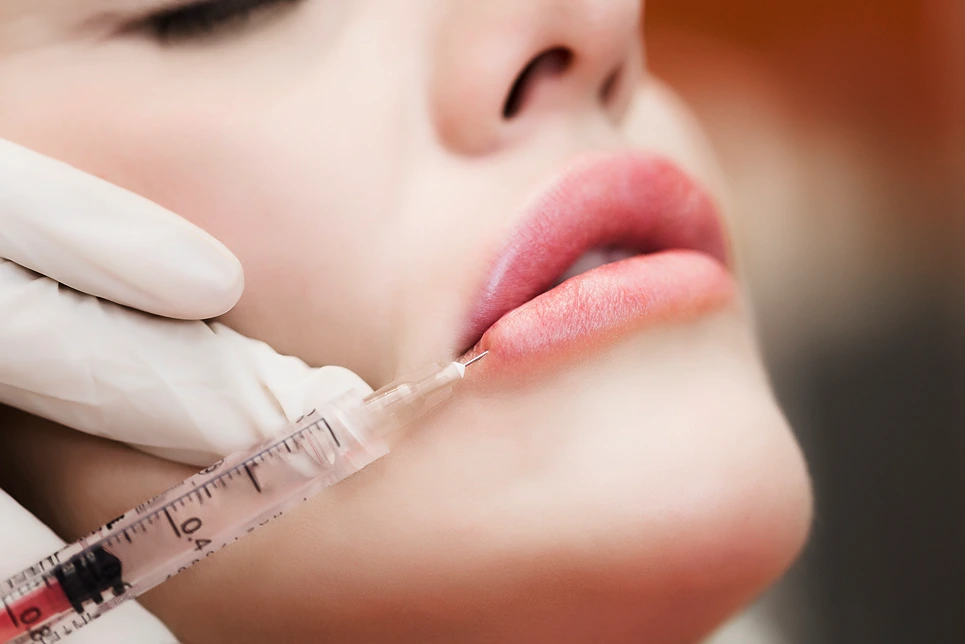
Lip filler swelling happens because your body is responding to tiny injection points and the presence of hyaluronic acid inside the lip tissue. The lips have a dense blood supply and delicate skin, so even small injections trigger temporary inflammation and fluid buildup.
The amount of swelling you experience depends on factors such as the type of filler used, how much product was placed, the injection technique, and your own tendency to bruise or retain fluid. This reaction is expected and signals that your body is healing and adapting to the filler.
Lip Filler Swelling Stages: Day-by-Day Timeline
Healing looks different for everyone. At first, it may seem daunting, but with the Montville Med team’s expert guidance on day-by-day after care, swelling after lip filler should be a breeze to manage. Practicing proper aftercare, including avoiding straws or sucking on items like lollipops and avoiding high-sodium foods, helps minimize swelling during recovery.
Understanding the swelling after lip filler day by day helps you feel prepared and confident. Here’s what to expect:
Immediately After (Days 1-3)
Swelling, tenderness, bruising, and a firm or tight feeling are normal — with swelling often peaking around days 2–3.
Helpful Tips:
- Apply a cold compress for 5–10 minutes at a time (never directly on skin)
- Keep your head elevated, including while sleeping
- Avoid lipstick, gloss, and excessive lip touching for 24 hours
- Stick to soft foods and stay well hydrated
- Avoid salty, spicy, or acidic foods
- Arnica may help reduce bruising
Days 4–7: Swelling Improves
Swelling begins to subside and lips start to soften. Mild tenderness, lumpiness, or asymmetry can occur and is usually temporary.
What Helps:
- Gentle lip massage (only if instructed by your provider)
- Warm compresses to encourage circulation
- Avoid hard or crunchy foods
- Be patient — filler continues to settle during this time
1 Week After Lip Fillers
Most visible swelling and bruising have resolved, and lips appear more natural.
- Hydrating lip products are safe; avoid matte or long-wear formulas
- Use sun protection on the lips
- Avoid intense workouts that increase heart rate
2 Weeks After Lip Fillers
By 10–14 days, lips should feel soft, smooth, and fully settled.
- Minor lumps or unevenness are uncommon but can occur
- Contact your provider if concerns persist
- Results typically last 6–12 months, with maintenance treatments recommended
Assessing Results After 4 Weeks
After four weeks post-treatment, you should evaluate the symmetry of your lips and consider additional filler if desired. It’s important to assess the results to ensure satisfaction.
Here’s a helpful table to guide your assessment:
| Aspect | Observation | Action Needed |
| Symmetry | Are both lips equally plump? | Consider additional filler if needed |
| Swelling | Any lingering swelling or bruising? | Contact your doctor if swelling persists |
| Overall Result | Happy with the outcome? | Schedule a follow-up if adjustments are desired |
Our Expert Care Adds Volume, Safely
At Montville MedSpa & Pain Center, our experienced injectors guide you through all stages of lip filler healing to ensure safe recovery and beautiful, natural results.
We use Juvederm lip fillers, which are formulated with hyaluronic acid to integrate smoothly into the lips while allowing for predictable, controlled healing.
Juvederm formulations are selected based on your goals. Softer Juvederm fillers, such as Volbella or Ultra, may cause more noticeable swelling in the first few days because they attract water, but they settle into a soft, natural feel as swelling resolves. Firmer Juvederm products used for shaping or definition may feel tighter at first, then gradually soften over the following one to two weeks.
Our team monitors your progress and provides personalized aftercare guidance to ensure your lips heal beautifully and comfortably.
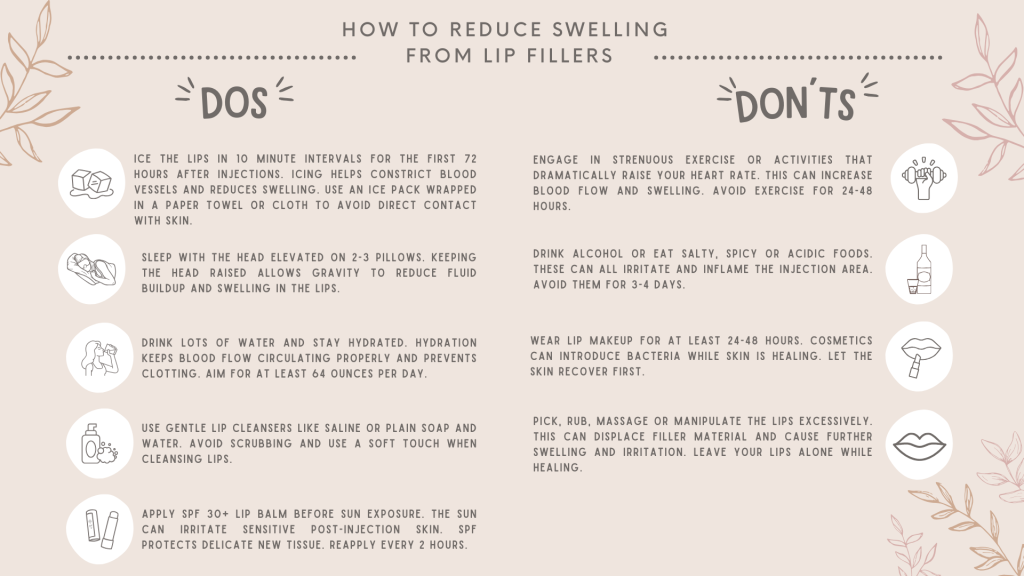
How to Reduce Swelling from Lip Fillers, The Dos and Don’ts
When to See Your Doctor
Contact your healthcare provider right away if you experience:
- Severe or worsening pain that isn’t relieved by medication.
- Excessive bruising that spreads down the chin or neck.
- Prolonged unevenness or lumps beyond 2 weeks.
- Signs of infection such as pus, redness, heat, or fever.
While daunting, swelling is a normal part of the lip filler process. Proper aftercare helps minimize swelling for a comfortable recovery. Be sure to avoid blood thinners and plan downtime after your treatment. With patience, your enhanced lips emerge beautifully as the swelling resolves!
Don’t take chances with your health. Contact Montville MedSpa & Pain Center right away if you have any concerns about swelling or other side effects after your lip filler procedure
Lip Filler Normal Reactions Versus Complications
Assessing your lips for normal reactions versus complications is crucial in the days following lip filler treatment. Here’s what to look for:
Normal Side Effects:
- Mild swelling and bruising.
- Slight tenderness or discomfort.
- Gradual improvement in the first week.
Complications to Watch for:
- Excessive or worsening swelling.
- Severe bruising is not subsiding.
- Persistent pain or numbness.
- Unusual redness or signs of tissue trauma.
It’s essential to monitor changes and seek medical advice if any concerning symptoms arise.
Recognizing and Treating Bruising
You can recognize bruising after lip fillers by observing the appearance of purple or blue discoloration on the treated area.
To treat bruising, follow these steps:
- Apply cold compresses to reduce inflammation.
- Use Arnica cream to alleviate bruising.
- Avoid blood-thinning medications to prevent worsening bruising.
- Consult your medical provider if bruising worsens or persists beyond two weeks.
Understanding the inflammatory response and caring for injection sites is crucial for effective bruising treatment.
Seeking Natural-Looking Lip Enhancement?
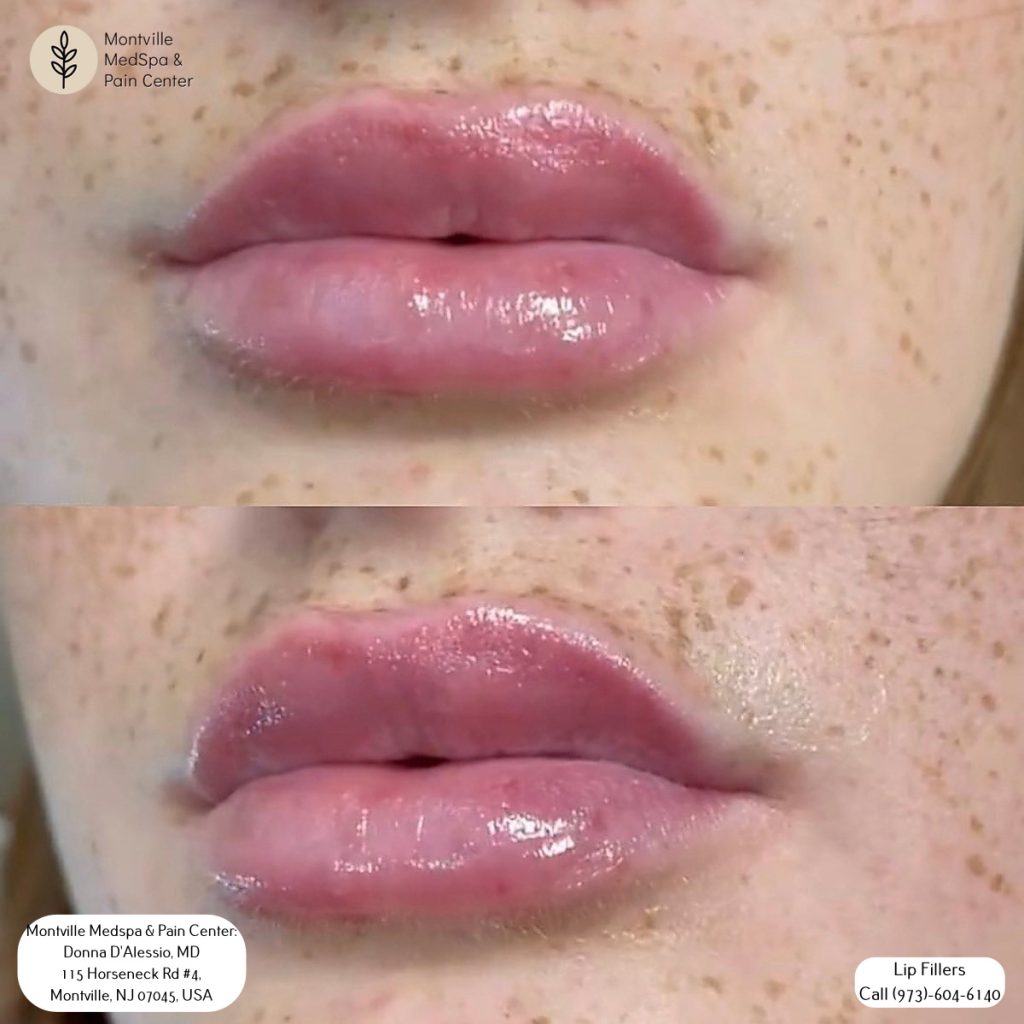
The expert injectors at Montville MedSpa & Pain Center provide natural-looking lip fillers customized to your individual needs and facial anatomy. We use the latest techniques to minimize swelling and discomfort.
Frequently Asked Questions on Swelling and Bruising After Lip Fillers
How Long Should I Wait Before Getting Lip Fillers Before a Special Event to Avoid Bruising and Swelling?
You should wait at least two weeks before a special event to avoid bruising and swelling after getting lip fillers. This time frame allows for the healing process, reducing the risk of visible bruising and swelling.
Can I Use Makeup to Cover up Bruising After Getting Lip Fillers?
You can use makeup to cover bruising after lip fillers, but wait until any open wounds heal. Use a color-correcting concealer and blend gently. Opt for gentle, non-irritating products and avoid rubbing the area to prevent further irritation.
Are There Any Specific Foods or Drinks I Should Avoid to Reduce Swelling and Bruising After Lip Fillers?
To reduce swelling and bruising after lip fillers, avoid high-sodium foods and alcohol. Hydrate well and apply ice packs. Consider over-the-counter pain medication if recommended by your doctor. Patience and proper care are key to healing.
Is It Normal to Experience Numbness or Tingling in My Lips After Getting Fillers, and How Long Does It Typically Last?
It’s normal to feel numbness or tingling after lip fillers. This can last a few days to a couple of weeks. Stay patient, it’s part of the healing process. If it persists or worsens, contact your medical provider.
Are There Any Exercises or Massages I Can Do to Help Reduce Swelling and Bruising After Getting Lip Fillers?
To help reduce swelling and bruising after lip fillers, try gentle facial massages and exercises recommended by your provider. These can stimulate circulation and aid in the healing process. Always consult your doctor before starting any new regimen.